self-help
Showing posts with label self-help. Show all posts

The Life-Changing Magic of Tidying Up by Marie Kondo


Yes, it can actually work some magic!
About The Life-Changing Magic of Tidying Up by Marie Kondo: This #1 "New York Times" best-selling guide to decluttering your home from Japanese cleaning consultant Marie Kondo takes readers step-by-step through her revolutionary KonMari Method for simplifying, organizing, and storing. Despite constant efforts to declutter your home, do papers still accumulate like snowdrifts and clothes pile up like a tangled mess of noodles?

Japanese cleaning consultant Marie Kondo takes tidying to a whole new level, promising that if you properly simplify and organize your home once, you'll never have to do it again. Most methods advocate a room-by-room or little-by-little approach, which doom you to pick away at your piles of stuff forever.

The KonMari Method, with its revolutionary category-by-category system, leads to lasting results. In fact, none of Kondo's clients have lapsed (and she still has a three-month waiting list). With detailed guidance for determining which items in your house "spark joy" (and which don't), this international bestseller featuring Tokyo's newest lifestyle phenomenon will help you clear your clutter and enjoy the unique magic of a tidy home--and the calm, motivated mindset it can inspire.


My two cents

If you'd like the exact principles, I urge you to pick up the book and scan the table of contents (and read the book, it's not very long!). Here are some key things that I personally picked up from this little volume:

The first task: discard. You can't start tidying without discarding. Besides, there is less to tidy!

There is an order to discarding. The idea is to start with the things you are less attached to and do the most sentimental things last: clothing, books, papers, komono (miscellaneous stuff), mementos.

Touch every single thing you own. Decide whether it "sparks joy" in you (yes, go by gut feel!). If its a "no," get rid of it. By doing this, you will be populating your home with only things that make you happy.

Everything has a place or a "home." Something with a "home" will never become clutter.

A tidy home can change your life. (And I believe it.)

***

I've seen people declaring this book and the KonMari Method as the next best thing since sliced bread!

I thought this book was quite simple and based on common sense.The problem lies in that we becomes attached to our stuff, have emotional attachments (some very deep seated!) which makes parting with things difficult and sometimes seemingly downright impossible. Common sense gives way to emotion, plus there is always some denial, right? (No, I'm not a hoarder; I really need this... sound familiar?)

I picked up this book because I'm always open to ideas for getting my house in order, from decluttering to storage. I've already moved to another continent and dealt with the mountains of stuff that we can't seem to help but accumulate over the years. Faced with a tight schedule and potentially exorbitant shipping costs, our family was practically coerced to empty the house and decide what was essential. That really changed my perspective! However, I did leave a pile of things in my childhood home which I still have to deal with. In our new place, I am finding that things are starting to accumulate once again albeit I am much conscious of it. Habits certainly die hard.

This book also ties in nicely to some principles in Gretchen Rubin's The Happiness Project, another book I liked. Principles like "let go" (discarding stuff!) and "spend out" makes it easy for me to continue down the KonMari road.

While Marie Kondo emphasizes that things be done in one fell swoop, I don't have the time at the moment. I don't want to start something I can't finish (i.e. discarding) when it's still in that weird winter-spring mode so I've picked a few things to do and looked at my drawers and closets and have made some progress!

What I liked

This book is simple, deceptively simple. While touted as tidying or decluttering book, the heart of this book is about changing one's attitude and relationship to the things one owns. I love the idea of keeping only things and surrounding myself only with things that spark joy.

There are some tips and tricks, too: like very specific ways to do things, like folding (upright), putting things in the fridge (upright), in the bathroom (no silly wire mesh holder, just wipe down shampoo containers bottoms). I realized that our carrots have been "standing" in the fridge just like Kondo's!

I already (partially) subscribe to the folding method Kondo describes (instead of stacking one on top of the other, folding garments and standing them like files in an upright filing cabinet) because it's made a huge difference to my underwear and sock drawers which were crammed full and often just stressed me out. After the discarding, I managed to put order into two drawers and realized that I have so much more space. Yay, I can finally find things! Several laundry sessions later, my drawer still looks the same, and I pretty confident that I can keep this up (at least for these two drawers!). (I may have to give up an update when I've done my full discard session during warmer weather.)

Here's how to fold socks and underwear, and what to do with bras :


I also like the idea that Kondo says that we each have our own gauge for determining when we have discarded enough, what is "just right" for ourselves. So book lovers, don't despair if you have hundreds of books because you, and only you, can determine what you think is "enough".

Lastly, I think the idea that we are all personally responsible for our own thing is key. Don't feel pressured to give something up because someone else said so.

Uh-ohs

This isn't a book for everyone.

For those looking for a quick solution, don't expect this to be a magic bullet. Contrary to that lovely title, to experience the magic, you will have to face up to your stuff, and yourself. This book will only be as useful, like many self-improvement books are, if one follows it. Unless you're open to its ideas, no matter how simple or even silly they may seem, don't expect any results. Put the book aside for a time when you are ready.

For those who have already embraced minimalism and/or a generally tidy, you may find a lot of this as elementary, dear Watson. You may feel these things are so obvious that you even wonder why a book like this has been written. If you think you've got things under control, you may find this book entertaining.

I think one big area that has the potential to rub people the wrong way is that this is written from a Japanese perspective and hence, be ready for cultural differences. Kondo suggests talking to things as they were alive (thanking them for the things they do in our lives), and references putting up mini shrines in our homes, and knowing how to discard of "expired" charms.

Verdict:

The state of tidiness of one's home is a reflection of one's attitude and relationship towards things. Deal with your attitude and use Marie Kondo's principles, and you will certainly reap the benefits of a tidy home that reflects and is an extension of the person you are. Skeptical? Don't knock this book just yet, it may just help!

Links:
Google Talks

Use All the Crayons! By Chris Rodell


Because life is anything but black and white!


About Use All the Crayons: The Colorful Guide to Simple Human Happiness by Chris Rodell: Chris Rodell likes to consult with a five-year-old anytime he needs a reminder as to what is important in life. In his uplifting, humorous, and spiritual guidebook Use All the Crayons!, Rodell encourages others to become universally happy by becoming more colorful, interesting, and, most importantly, fun!

Rodell insists that colorful people are invited to the coolest parties; with that goal in mind, he presents over five hundred tips and entertaining, Dale Carnegie–like anecdotes that provide a glimpse into how he has successfully transformed his life into one not focused on money or fame, but instead on inspirational experiences, laughter, and fulfillment. Accompanied by personal diary entries, Rodell shares simple ideas for living a more colorful life, including adding the title “Rev.” to all subscriptions and charitable donations, keeping handfuls of confetti ready for impromptu celebrations, and understanding the advantages of getting a $75 wrist tattoo of an $18,000 Rolex instead of the real thing.

Like a box of crayons, we are all born with an astounding range of color options. This effervescent guidebook combines populist common sense with a healthy dose of optimism in the hopes of teaching others how to make every day as vivacious as the brightest crayon in the box.

My two cents

Sometimes a good laugh is all it takes. In 501 snippets and essays interspersed, Chris Rodell captures the joy in the most mundane. This book is one smile, one laugh, one guffaw, then some contemplation. Then it repeats all over again!

Sure a lot of this is commonsense -- being in the moment, taking notice of what matters to us, our health, our family, community and friends. But isn't commonsense in shortage what with all the distractions and busy-ness in this world? It's nice to be reminded. And challenged.

I found the little pithy nuggets of wisdom in this one both amusing and funny. While I hate to compare people, Rodell's insightful humour reminds me of Robert Fulghum of All I Really Need to Know I Learned in Kindergarten-fame. There is always a teaching moment; the simplest and sometimes most trivial things can become the most meaningful.

***

This collection is diverse and I think there is something for everyone. Here are some of my observations and favourites; you're sure to find your own favourites!

No. 67: Because I'm a book blogger, I loved this: Next time you find reason to go to the local public library, sneak over into the children's section and read an old Dr. Seuss book you remember enjoying as a child. If you don't have a reason, make one up. Wonderful things happen there.


No. 225 and the following Colourful Diary Diary: Rodell suggests adding "Rev." when filling out subscriptions claiming "You'll be amazed at the fawning service you get." Well, he sure got the post office's attention: I noticed the "Rev." when he sent me my review copy and lo and behold, the "Rev." was encircled in red with some shorthand which seemed "fawning" to me!

No. 239 and the following diary entry: The virtues of getting a pedicure. Get one if you never have. Get one, especially if you are male :)

No. 326: Describing the odd, tingly feeling you get below the ankle as having your foot "fall asleep" doesn't cut it for colorful people. Try saying you're suffering from "comatoes."

No. 351 and the following dairy entry: Because I am sooo over Brad Pitt. Whiny is not sexy.

Uh-oh: There were some cheesy or even roll-your-eye moments in this one, I'll be honest (a Rolex tattoo, no thank you). Probably because I couldn't really relate to some of them. I after all, didn't grow up in an American environment. 


Verdict: This collection of humorous musings will inspire and challenge you to find joy in the simple, the trivial, and mundane. Find your favourites. Read and re-read. Open randomly, read, re-read. And share the book and its positivity and humour widely.

I received a copy of this book from the author in exchange for an honest review.

Links: 


Buy This Book from Book Depository, Free Delivery World Wide


This Book is Free!! That’s right. Free. Anyone who wants a copy mailed to his or her home, no charge, is welcome to one. Just ask. Author Chris Rodell, of course, encourages you buy it and hopes you’ll support him and the people who distribute, promote and sell books.

But if you’re one of those Americans who are out of work and having a tough time or if you know a U.S. serviceman or woman who might benefit from a book that aims to brighten daily lives, then Rodell wants you to get in touch at storyteller[at]chrisrodell.com. He doesn’t believe a book that at its heart aims to help people be happy should be withheld from anyone over a few dollars.  

“It’s said the best things in life -- love, friendship, laughter -- are free,” Rodell says. “I don’t presume that this book is one of the best things in life but, by God, there’s nothing to say it can’t keep good company.” 

The Beauty Experiment by Phoebe Baker Hyde


I can have my cake and eat too, i.e. I can have my red lipstick and love myself. 

About The Beauty Experiment by Phoebe Baker Hyde: I looked at my reflection and despaired. As an exhausted young mother I felt ugly and saw that a new dress or face cream would never help. I was at risk of passing on a habit of feeling miserable about my looks to my baby girl—if nothing changed.

Soon afterward Phoebe Baker Hyde made a vow: to give up new clothes, makeup, haircuts, and jewelry in hopes of revealing something she had always paid lip service to but never quite believed in—her inner beauty. The Beauty Experiment chronicles Hyde’s quest for self-acceptance in nothing but her own skin. In thoughtful, exquisite prose, Hyde holds up a mirror to all women and shows how perfectionism can keep us from achieving what we really want: happiness, confidence, and serenity.


My two cents

What if we forgot all the trappings of womanhood and focused on what really matters—inner beauty? Can you "survive" without your perfect red lipstick, or your power heels, your layered mane, or the perfect girly blouse? That's what the author did in The Beauty Experiment. As she navigates the expat life in Hong Kong, with an overly busy husband and headache-inducing demands of her children, she abandons all these things in an attempt to get to the crux of the matter ... and love herself.

While this is a fun and funny read, it will prod you into thinking about how society has shaped our ideals of beauty and much we place value in looking good, including the different superficial things that can become "crutches." This book breaks it all down from hair, cosmetics, how we and society judge a woman's appearance over history, clothing, appearance "professionals." And in the end, one can use the Beauty Wealth Calculator and see what percentage of ones' net worth goes into wardrobe and beauty products.

***

I have bad (horrible) hair days. I felt fat and ugly after pregnancy. I have had a love-hate relationship with my wardrobe. I can relate in so many ways to the feelings of insecurity experienced in different phases in her life throughout this book.

What I can't relate to is how the author equates her self-acceptance to these externals (which all seem to be quite skewed to the high-end spectrum, by the way). What was running through my mind was: Ahhh, First World problems! Why is ditching the lipstick or a salon haircut such a big deal in the first place? Really, how many cosmetics does one need (for example, going through her list of things to toss (p. 28) made me laugh -- I have never used anti-brassiness hair glosser or a microdermabrasion kit in my life!)? Why does she place so much value in buying the new designer dress for potentially just one-time use?

This is the list on page 28 ... how many of these do you have?
For a person like myself, who is pretty low maintenance and is all into moderation, this is mind-boggling because I feel that having these external trappings and inner beauty aren't mutually exclusive concepts. I'm a bit of a cynic and it's difficult for me to wrap my head around totally buying into what media says. I also think that I can have my cake and eat it too, i.e. I can indulge in my favourite red lipstick and love myself at the same time.

Props to her for her honesty, though. She doesn't sugarcoat anything (let's face it, who wants to admit that they don't shave their armpits?)

The "beauty" crisis that the author goes through seems more a function of her low self-esteem and the major life changes she was going through. The fact that she was also in an alien culture with its own set of views about appearances didn't exactly help her already fragile ego.

This book is a memoir, and as such, there is a lot of information about the personal circumstances of the author (albeit a little bit whiny for my taste). This is not a cut-and-dried experiment as the title led me to believe. However it is a valuable documented experience of one woman, informed by her own research and gaining more info from woman surveyed.

Verdict: This book has the potential to resonate with any woman with its lesson of self-love and self-acceptance, whether one loves their beauty products or not! While I found the experiment a bit extreme, I can relate to the author's struggle to understand herself better and find her happy balance.

***

As part of this review, I decided to try one of the suggested activities provided by the author. You may want to try one of these yourself!

I chose no. 2 under the Experiment Activities because I did a variation of it several years after my pregnancy.

My wardrobe was littered with clothes that simply did not fit, lots of faddish pre-pregnancy pieces, and lots of things on sale which I bought because they were on sale and not necessarily because I liked them. It was all a function of impulse buys, of sentimental clothing, and a (rather futile) hope that I'd fit into all my clothes again. My wardrobe stressed me out.

I decided to de-stress myself. I decided that I would only buy what I needed (say, I need a new pair of dress slacks and not: "I'll go shopping to feel better"), and only what I loved (no more: "I guess it looks ok on me, and it's cheap" ...).  I took my time window shopping. I would try the piece on. I often went home empty-handed (sales can no longer pressure me!) After often having slept on it, I would go back to the store if, and only if, I was absolutely sure I wanted to buy the piece. This is how I shop for clothes to this day.


Experiment Activities: 

1. Identify your major cosmetic crutch and go without it for two weeks, noticing any changes. I think it takes about two weeks to really start feeling positive results, whereas negative ones start in one week!

2. When in need of a new garment, go shopping without money and enjoy the "costume box approach" to the world's malls. Then go back to the same stores a second time and purchase any items you still want/remember. Gauge how your habits and shopping experience shifted.

3. Cover all but a small section of the bathroom mirror in your house for a week. Take notes on any changes, particularly interruptions of mental flow.


***
Inner Voice Activities:

1. Transcribe a recent inner conflict you've had as if it were two separate people arguing in dialogue. Label these voices "Me" and "Argumentative Inner Voice." Then, write out a monologue featuring the AIV riffing on the problem, as if or she could hold forth without limit. Afterward answer a few questions about that inner voice: What is it afraid of? What are it's survival strategies? What does it want to protect you from?

2. Draw a timeline chronicling the development of this inner voice, adding all the influences that have combined to form it over the years. Start as a tiny girl and go all the way to now. What "injuries" or setbacks has this inner voice suffered?

3. Write a love letter to your inner voice, explaining that you find him or her useful and appreciate the help, but would like to reframe your relationship. Explain how.

Check out the rest of the tour here. 
I received a copy of this book from the publisher via TLC Book Tours in exchange for an honest review.

Phoebe Baker HydeAbout Phoebe Baker Hyde

Phoebe Baker Hyde has written on self, place and culture for The New York Times, The Los Angeles Times, Salon.com, and The Wall Street Journal. She holds degrees in Anthropology and English from the University of Pennsylvania and Master of Fine Arts in writing from University of California at Irvine. She currently lectures and teaches in Boston.

Find out more about Phoebe at her website, connect with her on Facebook, and follow her on Twitter.

Paperback: 248 pages 
Publisher: Da Capo Lifelong Books; 1 edition (December 23, 2012)

Full Wattage! by Liz Fletcher Brown


Full Wattage! A Practical Guide to Living an Engaging and Purposeful Life Worth Celebrating by Liz Fletcher Brown

Amazon.com: Paperback

Because you deserve it!

Synopsis: Have you lost the spark in your career or personal life? Are you feeling bored, restless, burnt out, overwhelmed or stressed? In Full Wattage! Liz Fletcher Brown shares with you practical tools, processes and valuable insights to help you find new meaning and enthusiasm at work and at home. It's your life, so why settle for anything less than being fully, dynamically, and enthusiastically alive? Unlock the secrets to living with Full Wattage! today.

My two cents: 

Some people have a special spark, an extra little something, the X-factor; something that sets them apart from even the more skilled, the more educated, the more whatever. Think about it: personally I'd much rather watch/listen to someone loving to dance/sing/whatever than simply going through the motions.

This is what Full Wattage! reminded me: passion and purpose are more important than perfection. It's not simply just being good at something, but discovering one's passion and purpose in life, or as the author asks: What is your core? 

Liz Fletcher Brown's dancing background sets the book's metaphor of dance for life. (This metaphor makes the discussion so much more accessible. Check out the fun chapter titles: setting the stage, how to keep your balance when the floor is rocking, discovering your dance life, and so on).

The author explains for a dancer, "our core is our powerhouse, our inner strength, the center from which all our all our movements and energy radiate. It's our brilliance!"

In layman's terms, one's core includes:

  • Your sense of purpose
  • Your natural strengths, gifts, and talents
  • Amazon.com: Paperback
  • Your values

All this seems simple enough, right? But what this book does is break it all down and lead you through some serious self-examination, self-evaluation -- all surprisingly without any self recrimination. Reading through this book isn't difficult but if you want to maximize what the author is offering you, you need to be be honest with yourself.

If you're not quite ready to do that, I recommend you read through this book open-minded and come back to it with the intent to do each exercise, answer each question, and spend time in some introspection. It's not meant to be read; it's meant to be done.

***
The book format alternates between short chapters of explanation and various activities such as little quizzes and checklists (you need your own copy because you'll want to write everything down!)

Chockfull of little anecdotes from Liz's own life and drawing from her experiences with the many people she has worked with, there are numerous examples of other people's own experiences.

Chapters are short. Everything is doable, no nonsense and practical.

There is no lecturing, only encouragement and an obvious intent to inspire. Liz's voice is clearheaded, enthusiastic and unflappably optimistic: it actually feels like a friend is leading you through these exercises!

What resonated most with me is that this isn't a quick fix, the core of the book goes to the basics including examining ones' values. In my opinion, that is what sets good self-help books from those that are mere fads.

This is a wonderfully practical book to pick up if you're ready to recharge and make some real changes in your life.

Verdict: I love self-help books, especially if they are practical and do-able. Full Wattage! now makes my "most helpful self-help book arsenal." I highly recommend your getting own copy as quizzes are integrated with the main text. Check out further resources on the website.

Learn more about Full Wattage and Liz Fletcher Brown here:
I received a copy of this book from the author in exchange for an honest review. I also hosted Liz Fletcher Brown's guest post Dance with Full Wattage and a held a giveaway on this blog. 

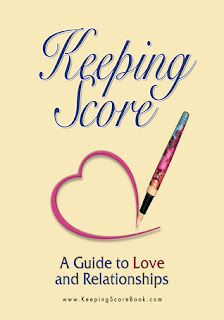
Keeping Score by Marc Brackett

Keeping Score: A Guide to Love and Relationships by Marc Brackett

Commonsense + honesty + openness = Keeping Score

The book in one sentence: A fun quiz book that will get you taking stock of your relationship with your (current or future) significant other.

Synopsis of Keeping Score by Marc Brackett: It's a relationship book even a man can understand. Keeping Score provides a relationship evaluation quiz followed by a common sense guide for relationship improvement, all with a humorous twist. You can determine if your relationship has the qualities it takes for a successful marriage and lasting love affair. If you're single, read this book to see how well your potential life partner measures up. If you're married, read this book to reduce conflict and increase your happiness. Take control and shape your union into a relationship that will stand the trials of life and go the distance.

My two cents:  

Relationships are complicated. We get engrossed in the fine details of our relationships, and its various aspects -- in all its glory and gore. We know it. We live it.

So-called commonsense can keep relationships going, but apparently this is in shortage (especially when emotions are involved) that this book was born. This is "a relationship book even a man can understand" and it's written by a male author, so if you're female this is what you say to your man if you want him to take the quiz. And if you're male, well, you're supposed to understand this.

Yes, this is a fun read! But let me qualify that -- it's not a straightforward read so "reading" it is a little different. This slim book is divided into three parts:

Part I is titled "Adam and Eve" and it branches out into two sets of quizzes, one if you're male and the other if you're female. You go through four sections for each gender, three of which are unique and the last section common for both partners.

  • Section 1: For Eve, this looks into a woman's thoughts on the ability of her partner to provide financially. For Adam, it looks into a man's thoughts on the physical attributes of his partner.  
  • Section 2: For Eve, this looks into the factors of how a woman feels loved by her partner. For Adam, it looks into areas of potential conflict with his partner, including financial, nurturing, and loyalty.
  • Section 3 is a bonus question. For the women, it is about her partner's sense of humour; for the men, it is about (oh no!) feeling (in)adequate!
  • Section 4 is about common interests and how other influences impact your relationship. Some touchy areas it looks into are family (including the in-laws, children and other family member through other marriages), religion, and shared activities.
Part II is titled "Knowledge is Power" and provides insights on the quiz items. This is the meat of the book.

Part III is titled "A Score to Win" and guides you into looking at your relationship score, analyzing it, and deciding how you can get the relationship you really want.

A big part and a very substantial resource is the website - www.keepingscorebook.com - that you should look at in conjunction with this book. The book is merely a jumping board; the website the ocean.

What I liked: The format - it's small and you can pop this into your bag and do the quiz on the bus or during a break at work. 

It is also extremely easy to read and understand. There are tons of analogies so that various points get across crystal clear. For example (Though I must express some resentment at woman being compared to a car! This isn't exactly a politically-correct book!): 
A woman can have all the goods you like, but if the soul is a poor match you'll find the goods a whole lot less enjoyable. Think of it like a car. You can admire a Lamborghini, but would you like paying the insurance, worrying about scratching it [...] - p. 61
The humour. Generally, I found the quizzes funny and I found myself snickering throughout the book. (Though sometimes I found some of the humour a bit tongue-in-cheek). For example: 
What is the condition of your partner's tail end? How do your partner's "assets" compare with your preference in this area. Some like a tight end, others like some junk in the trunk. To each his own. How's the scenery from your viewpoint? - p. 56
Overall I think this book is an excellent tool for taking stock of yourself as relationship material, figuring out what your own stand is on various aspects of a relationship, and just generally opening up an avenue for communication with your partner. The caveat is that you need to be honest in your answers. And if you intend on bringing in your significant other, s/he has to be equally open to the process of taking the quizzes.

Uh-ohs: I know I said I liked the format, but I have secondhand thoughts about the format of the quiz sheets. I was having some issues with the scoring and the flipping back and forth and I resisted the urge to just tear out the score sheet. Then I got the next part where there is getting the difference from the maximum score and I went uh-oh, why is this so complicated? Also, I kept thinking that the scoring and the explanations should be nearer the actual quiz.

(Note: I also entered my score on the website and it was an answer to some of my gripes above. But this is a review of the book after all. While the quiz part of this translates better in an online format, what's the fun of reading online? I recommend you read through the whole thing, then verify your scores by entering online where you also get the added benefit of comparing to average scores.)

I worry that this book caters to a only heterosexual relationships. If I were gay, which quiz should I take? What is you're in a same sex relationship - so both of you take the Eve quiz or the Adam quiz? Maybe I am overanalyzing this, but the question begs to be asked.

What I found a little worriesome is that there are several assumptions for each gender that didn't quite sit too well with me. The first part of the gender-based quizzes are based on very obvious gender stereotypes: that women are interested in a mate who can provide for her (hence a stress on the financial side of the relationship) and that men place a high value on the physical attributes of their partner. Hmmm ... do we risk perpetuating stereotypes in a relationship by presenting these generalizations as fact?

The cultural lens through which this book came about is based in the dominant culture of North America. While the latter parts of the quizzes are quite open, I found myself wondering how different cultures, which place value different things, would read this and score. For example, Asian cultures value family way beyond what is mentioned here, extending to the value of a person with a community but this isn't reflected in the book and would probably be subsumed under another topic (common interest?).

Overall, I maybe overanalyzing. I think the best way to reap some good from this book is to take it at face value, have fun with it, and open up communication channels with your significant other. Yes, that's commonsense! 

Verdict: A fun way of assessing your relationship! A great tool for opening up conversations about the mundane and the things that matter in your relationship ... just be sure to be honest about it!

I was provided a review copy by the author in exchange for an honest opinion. I have also hosted a guest post "Taking the Long View" and held a giveaway on this blog.

(Apologies for the delay in getting this review up -- this 116-page book is a lot more involved than I expected!)

Friday 56 & 7 Habits

When he reaches those critical teenage years, the identity crisis, will he know from his experience with you that you will listen without judging, that you really, deeply care about him as a person, that you can be trusted, no matter what?
- p. 56, The 7 Habits of Highly Effective People, Powerful Lessons in Personal Change by Steven R. Covey

I have a ratty copy of this stashed away. And I keep coming back to this book ... because questions like that just pop out at me. Then I get all contemplative.

Isn't hard to find someone who will ask you those questions that are just begging to be asked ... and answered? This book is like the shrink you always needed. Or the best friend who isn't afraid of your reaction, however adverse it may be. Sometimes we need someone to push their hard love on us.

Join in The Friday 56 fun over at Freda's Voice!
Because you know you want to find out what other people are reading!

Happy weekend all!

The Happiness Project by Gretchen Rubin


Because who doesn't want to be happy? 

I rue that my daughter is growing up so quickly. Truly, the days are long, but the years are short. And if you nodded in agreement - even just once - while watching the video, then you must agree that there is a nugget of truth, so simple, so elemental, that actually feels like a kick in the butt. The Happiness Project Or, Why I Spent a Year Trying to Sing in the Morning, Clean My Closets, Fight Right, Read Aristotle, and Generally Have More Fun by Gretchen Rubin is a series of these seemingly common sense truths.


The book in one sentence: Gretchen Rubin embarks to find out what makes her happy, approaching it methodically like a research project.

My thoughts: Ice cream, warm and lazy days, new books, my daughter's laughter, that funny way the hubby looks at me when we have our own little secret - I know these things make me happy. But why? And why don't I have more of these happy moments?

I came across this book quite by serendipity while poring over at my neighbour's yard sale books. I went home with this hardbound for 50 cents. And I must say, it now is among those books - along with the blog - that gives me inspiration to purposely be happy.

So what does it take to be happy? I found it such a great idea to approach this often amorphous concept of "happiness" in such a stringent and rather academic fashion. Similar to bringing in professional skills into use for running the household - say scheduling or accounting - Gretchen Rubin developed a plan to be happy. Not that she wasn't, but she felt she wasn't happy as she should be. To help herself out, she devised Twelve Personal Commandments, honed in on Four Splendid Truths, and laid out a doable plan to work on certain things over a year.


Twelve Personal Commandments
  • Be Gretchen.
  • Let it go.
  • Act the way I want to feel.
  • Do it now.
  • Be polite and be fair.
  • Enjoy the process.
  • Spend out.
  • Identify the problem.
  • Lighten up.
  • Do what ought to be done.
  • No calculation.
  • There is only love.
Four Splendid Truths: 
  • First: To be happier, you have to think about feeling good, feeling bad, and feeling right, in an atmosphere of growth. 
  • Second: One of the best ways to make yourself happy is to make other people happy; One of the best ways to make other people happy is to be happy yourself. 
  • Third: The days are long, but the years are short. 
  • Fourth: You’re not happy unless you think you’re happy.
Many, many, many of these things resonate with me. The above is just a sampling; the book abounds with small wisdoms that many times I was just going "oh yeah" - nod -"yes!"

For example "Spend out" - do you save your good china for "special occasions" that happen once in a blue moon? Why not use your china, enjoy them now? Or, take my once silly liking for faddish shoes ... how many cute shoes actually make it beyond a few months, and can I rant about how they hurt like crazy!? I've since learned to splurge on cute but more expensive shoes, and my feet thank me.

Or take "challenge yourself-learn something new" - I would consider this blog something along these lines. I started a reading blog to push myself to read books I would otherwise pass over. I have crossed literary genres, dipped into more non-fiction. This blog is a testament to my now immensely satisfying reading life!

I'm sure you could come up with your own examples! These is no one size fits all here - it's pick and choose what resonates and works for you.

I love how Rubin has been able to turn the spotlight on herself and can laugh at herself. I've come to love how she ruminates on mundane things in her life and get such great insights into herself. Small things can truly make a huge difference in day to day living. Her writing is honest, heartwarming and diary-like, never preachy, and always funny and encouraging!

As I don't want to spoil things for anyone, I encourage you to check out the book and her blog, which is chock-full of so many great ideas, all practical, all do-able ... and all up to you!

Verdict: Makes a permanent home in my personal library, along with Covey's Seven Habits of Highly Effective People.
·
OLDER


© guiltless readingMaira Gall