series
Showing posts with label series. Show all posts

The Girl Who Kicked the Hornet's Nest by Steig Larsson


Oh no, it's the last book!

The book in one sentence: The girl with the dragon tattoo's surprising comeuppance.

Serious summary of The Girl Who Kicked the Hornet's Nest by Steig Larsson: In the concluding volume of Stieg Larsson's Millennium trilogy, Lisbeth Salander lies in critical condition in a Swedish hospital, a bullet in her head. But she's fighting for her life in more ways than one: if and when she recovers, she'll stand trial for three murders. With the help of Mikael Blomkvist, she'll need to identify those in authority who have allowed the vulnerable, like herself, to suffer abuse and violence. And, on her own, she'll seek revenge--against the man who tried to kill her and against the corrupt government institutions that nearly destroyed her life.


My two cents

While I was reading this, I knew in the back of my mind that it would end. Now that it has ended, I am disappointed knowing that "the end" has so much more finality because I know I will never be able to read any more of Steig Larsson's work.

I'm actually surprised that I enjoyed this trilogy as much as I did. I was very wary because of the hype and then the movies came out. I even dismissed this as another flash-in-the pan series. I have to say that I retract that ... I have to give this series more credit than that!
 

I found the first book, The Girl with the Dragon Tattoo, a somewhat dark read. But it was a definite page-turner and I got drawn in because who can resist such a strange character as Lisbeth? She's definitely a far cry from any "typical" heroine. She's very, very odd which equals very, very interesting in my books.

I could have stopped with the first book and been perfectly happy with my little gruesome mystery. But with the two next books readily available for the reading, i.e. friend pushing books into my face :) - what the heck, right?

So I dove into the second book The Girl Who Played With Fire. This sealed my love for Lisbeth and with that cliffhanger ending ...

... of course I needed to read the third book, The Girl Who Kicked the Hornet's Nest. I think it is wonderful way to bring some closure to Lisbeth's life story -- a perfect continuity throughout the three books ending in revenge and redemption.


The Millennium Trilogy: 

*

As I don't want to give any spoilers, I'm highlighting a few key points:

What I liked:

Lisbeth, Lisbeth, Lisbeth! Her character is consistent throughout and as more details about her past are revealed I only just liked her more. Everyone seems to admire her for different reasons - smart, ballsy, independent, among other. I admire her because she never pretended to be anyone else. She had an honest integrity about her. Naturally I cheered her on towards the end.
The pacing. Like the second book, which ended practically begging for you to have book 3 on hand, I again raced through this with the intent of finding out whether Lisbeth would (a) get out of this alive and (b) whether she would be found innocent of the two murders in book 2.

The conspiracy. While the theme of violence against women is a common thread throughout the trilogy, it is further heightened by the conspiracy within government - including a secret sector of the Swedish Police - to keep things under wraps. {Yes, I know this is cryptic but I don't want any spoilers!} This really satisfied my need for book 2 to evolve and become richer and more complex than a simple life story, fascinating as it already is! Those who love conspiracies will love the detail in this one.

The rallying of Lisbeth's allies. The whole cast of the previous books -- Blomkvist and the  Millennium staff, Armansky and Milton Security, and of course, Lisbeth's kin of hackers -- all these come together in an unlikely fashion to support Lisbeth in proving her innocence and finally to battle it out in court.

The ending. It's simple and satisfying yet it left me wanting some more!

What I disliked:

The writing is awkward, just like the first two books (but I attribute that to the translation, despite it being much better this time around). Nonetheless long-winded descriptions, meandering and even trivial details can wear one down. If I can't forget that page-long description of Lisbeth's IKEA purchases in book 2, I can forget about the detailed descriptions of the secret sector hierarchy, inner workings and more political back stories -- because I skimmed through them. And what's up with the footnotes (which I ignored)? 

Oh these red herrings! Berger's switch to a new job. Berger's stalker (and Berger's entire kinky sex life). Blomkvist's new lover. (Anyone notice Larsson's fixation on people's sex lives?) And Camilla, mentioned this book and the previous ... nada.
Improbable yes. But made a good story, I can't deny it. There were quite a few times when I went "Gah, really?!" or "No way that could've happened" or just plain head shaking. Despite the disbelief, I'll let Larsson have artistic license because I enjoyed the ride.
***

Verdict: More page-turning action where Lisbeth Salander bests the best of them and gets her comeuppance. Thriller, suspense, conspiracy, and treatise which is non-negotiable reading if you've read one or both of the previous books in this trilogy.

First line: Dr. Jonasson was woken by a nurse five minutes before the helicopter was expected to land. 

Last line: She opened the door wide and let him into her life again.

The Girl Who Played with Fire by Steig Larsson


The girl with the dragon tattoo also played with fire ... and I think it's grand!

The book in one sentence: The back story of the girl with the dragon tattoo.

Serious synopsis of The Girl Who Played with Fire by Stieg Larsson: Mikael Blomkvist, crusading journalist and publisher of the magazine "Millennium," has decided to run a story that will expose an extensive sex trafficking operation between Eastern Europe and Sweden, implicating well-known and highly placed members of Swedish society, business, and government.

But he has no idea just how explosive the story will be until, on the eve of publication, the two investigating reporters are murdered. And even more shocking for Blomkvist: the fingerprints found on the murder weapon belong to Lisbeth Salander--the troubled, wise-beyond-her-years genius hacker who came to his aid in The Girl with the Dragon Tattoo, and who now becomes the focus and fierce heart of The Girl Who Played with Fire.

As Blomkvist, alone in his belief in Salander's innocence, plunges into an investigation of the slayings, Salander herself is drawn into a murderous hunt in which she is the prey, and which compels her to revisit her dark past in an effort to settle with it once and for all.

My two cents

This is going to be one of my rare short raves ...

I knew that this would be a quick read, I just wasn't expecting to finish it in less than 24 hours! And the reason was ... I ... just ... couldn't put this down! I was up until the wee hours of the morning and I practically slept a few hours before cracking this open again. It was that good! In fact I found it even more satisfying that the first book, The Girl with the Dragon Tattoo.

Why?
The story is tighter, none of those red herrings!

The story is extremely quick paced! I wanted to find out whodunit! I wanted Lisbeth to be innocent!
Salander is growing on me ... I like her even more in this one. There is better insight into the psychology of this heroine. Psychoanalyze away!

There is continuity from the first book. I guess this sounds only logical, but other books can get so convoluted and confusing. I  had no trouble remembering what happened in the past because Larsson rather deftly was able to remind me of past events and people in a not so obvious way. 

While violence against women remains a continuing theme, I found this one to be less gruesome yet just as hard hitting.  

With yet another cliffhanger ending, I can't wait to read the last book (The Girl Who Kicked the Hornet's Nest)!
And with that ...

Verdict: A page-turner of a psychological thriller. A definite must-read if you enjoyed The Girl with the Dragon Tattoo -- how can you not want to find out what happens to our heroine?

First line: She lay on her back fastened by leather straps to a narrow bed with a steel frame.

Last line: He put it on the floor, took out his mobile, and dialled the number for emergency services.

The Millennium Trilogy:
Book 1: The Girl With the Dragon Tattoo

The Girl with the Dragon Tattoo by Steig Larsson


And so family skeletons are unearthed by this girl with a dragon tattoo. 

The book in one sentence: A girl with a violent past helps solve a 40-year-old family mystery.

My thoughts 

I've been coming across The Girl with the Dragon Tattoo online quite a bit. It resurfaced again at my office Christmas party, the trilogy was up for grabs as a prize. Now, there is the much awaited movie. I didn't win the books, but a friend ended up lending me her copy.

I had no idea what this book is about. My initial impression was that it was either a paranormal book (dragon tattoo anyone? I usually steer clear of paranormal), or chick lit (albeit edgy, because of that tattoo). I was way off target. Reading the book cover flap, I find out that this is a crime-mystery thriller! Being a huge Agatha Christie fan, you can imagine my excitement!

***

Set in Sweden, three main characters converge:

Mikael Blomkvist, publisher of the Swedish political magazine Millennium, loses a libel case involving the alleged criminal workings of billionaire industrialist Hans-Erik Wennerström. Sentenced to three months in prison, he finds himself in professional hot water, on the brink of losing Millennium ...

Enter Henrik Vanger, the retired CEO of the Vanger Corporation which was experiencing some hard times but still highly influential. Haunted and obsessed with the disappearance of his beloved niece, Harriet, some 40 years ago, he enlists the help of Blomkvist to solve this mystery.

The investigations pick up and Blomkvist is referred to someone who can help him with his research -  Lisbeth Salander, a 24-year-old hacker.

***

The storyline is quite simple. In exchange for Blomkvist's services to investigate Harriet's disappearance, Vanger would hand over Wennerström's head on the platter, so-to-speak, to Blomkvist when the year was up. Blomkvist could then redeem himself from the libel case.

Stieg Larsson had me when Henrik Vanger broke down upon receiving yet another framed pressed flower in the mail, a tradition that was started with Harriet, stopped at her disappearance, and later restarted. He was convinced that Harriet's killer was sending them to taunt him. After such a promising beginning, I was a little disappointed when the beginning of the book is slow. I was actually yawning through the first chapters, wondering when anything, something, was coming.

But my patience paid off. I pounded through this book in two days! This is a fantastic read! In many ways, it reminds me of Agatha Christie as it looks into the human mind, in all its perversity. As Vanger was convinced that one of the family was involved in the murder of Harriet, Blomkvist discovers : “Every family had a few skeletons in their cupboards, but the Vanger family had an entire gallimaufry of them.” (Errr, what does gallimaufry mean?)

And so Blomkvist enters into the world of the Vangers. He discovers a twisted family history with politics with a Nazi connection. Salander enters the picture with her superior hacking skills, her strong no-nonsense attitude.With intense, fast-paced action, together finally put Henrik Vanger's mystery to rest.

***

I found the character of Lisbeth Salander quite fascinating; with her sad and violent past, she was only one who I remotely cared for in the entire book. She is a genius yet declared by the state as anti-social, a druggie, unstable, violent, incompetent and needing a guardian. Lisbeth is the driving force of the novel - her story and her character complexity is astounding and without her, this novel wouldn't have the same punch. Her tattoos, her piercings, and her all-black ensembles are stereotypical, yes, but she has a multi-dimensionality that none of the other characters have.

One very strong point is that this is very much a commentary and exposition about violence - it tackles it in such a raw, gritty and unapologetic way that it makes some parts quite difficult even gruesome reading. You will read about rape, incest, sado-masochism, degradation to women. (If you can't handle graphic descriptions, then take my advice and please steer clear of this book!) Lisbeth is a study of this violence, the serial killer that they stumble upon, as are the various sub-stories within the Vanger family. The movie Seven kept popping up in my mind as I was reading this.

What makes this novel modern and relevant is the information angle. It highlights that information is power, and that in this highly wired world, the issues of privacy and security are moot, whether as an individual, a corporation, or even a country. It also delves into media, public relations ploys, and corporate espionage, making it highly relatable to today's realities.

***

While reading, I loved it. But upon a little rumination, I found less than satisfying how some of the themes were explored. For example, there was a religious angle that never really panned out (the listing of Leviticus passages that were the basis for murders). Also, the whole Nazi sidestory, which is potentially a very controversial an angle, never played out either. I felt rather shortchanged on those two fronts - why introduce them in the first place? There were just too many red herrings which failed to deliver.

I would have been happy with the book ending after the Harriet disappearance resolution. But no, Larsson had to see this book through. I felt that that perfect arch detracted from an already powerful storyline. So I suffered through a few more chapters and hated it.

I have a feeling that this probably reads much better in the original Swedish. There are some very odd words thrown in there! (I won't yammer about gallimaufry anymore, but who the heck has used that word?)

And lastly, as I am wont to nitpick, what were all those strange references to computer systems?  For example, Lisbeth's computer was run over and she needed a replacement and Larsson goes to list the specs of the computer. Or how about that odd and sudden reference to ADSL or that shareware notebook application? They may have seemed hip at the time of writing, but now it just reads outdated.

***

Verdict: If you were fascinated with Dan Brown's The DaVinci code, you will probably like this one! But honestly, have you picked up The DaVinci Code again recently? This is another "flavour-of-the-month book" -- a gripping fast-paced story which you will want to read, and even watch the movie ... and promptly shelve and never re-read. 

I would definitely read the two other books in the trilogy (The Girl Who Played with FireThe Girl Who Kicked the Hornet's Nest). But I have a feeling that the remaining books will be a shadow of the original.
First line: It happened every year, was almost ritual. 

Last line: She tossed Elvis into the dumpster.

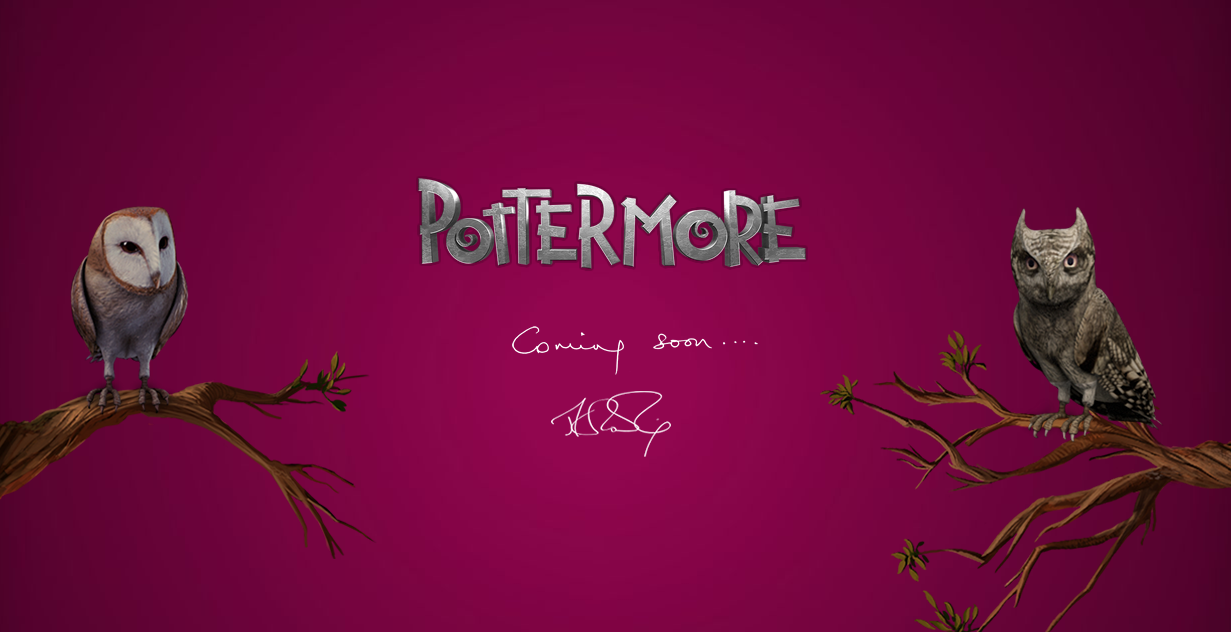
Pottermore! Yes we want more! What's in store for Harry Potter?

(The ABC video that was here originally was removed. Check it out here.)

The owls are gathering ... If you're a Harry Potter fan, then you probably got wind of this mysterious website Pottermore. The interwebs is abuzz with speculation! Add to it JK Rowlings's announcement and here Twitter feed (if it's to be believed that this is the real JKRowling) which claims "This is the real me, but you won't be hearing from me often I'm afraid, as pen and paper are STILL my priority at the moment."


Potterhead daughter cannot contain excitement. Honestly, me neither! 

The Borrowers by Mary Norton


Aha, so that's where my {fill in the blank} went!

About The Borrowers by Mary Norton: The Borrowers are tiny people hidden away in houses and safe places, living off what they borrow from human Beans. Pod and Homily want daughter Arriety to be safe, never seen, but she feels lonely and trapped. The Boy visiting Great Aunt Sophy brings doll furniture in exchange for Arriety reading, until mean housekeeper Mrs Driver calls the rat-catcher.

My thoughts

The book in one sentence: Our heroine borrower Arrietty Clock has befriended a human boy ... and nothing good ever comes out of befriending "human beans!"

***

I have always loved The Borrowers. I grew up with that sixth sense that they existed. (Well, I was pretty sure fairies were real too.) Unconvinced? The proof is obvious: everyone loses small things (pins, needles, scraps of paper and other whatnot), and if you are like me, you would swear that you knew exactly where you placed it, and yet ... it's missing. So where is it? It's probably made it's way into the hands of a Borrowers.

The Borrowers are teeny tiny people who inhabit small spaces in our homes and whose elusiveness make us "human beans" wonder if they even exist. They are called Borrowers because they "borrow" human things and make use of these things to survive.

This first book of the series introduces us to a Borrower family, the Clocks - Pod, his wife Homily and their spirited daughter Arrietty. They, along with many other Borrower families (the Overmantels, the Harpischords) have lived in the house for ages ... but their race seems to be dying out. Arrietty has been very much sheltered from the realities of the borrowing life.

Pod returns from one of his borrowing trips and shakily tells them that he has been seen by a "human bean." Arrietty then hears horror stories of how being "seen" by humans results cats being brought in, missing Borrowers, or Borrowers venturing out beyond the house to "immigrate" and yet never to be seen again. In the bid to train Arrietty to be more self-sufficient, Pod allows her to join him in next borrowing trip - to Arrietty's utter delight, as she is becoming more and more unhappy living under those floorboards with no light and little freedom.

Her adventure begins when she steps out of those floorboards. She revels in the sun, the garden, the hugeness of the world outside. She inadvertently runs into the young human boy from India who has been living in the house. And being the friendly and rather naive young Borrower she is, she befriends him. What develops is a lovely friendship, not without its own idiosyncrasies, yet putting the Borrowers into much danger.


Another world ...


What strikes me about The Borrowers is its imaginativeness. I accept the whole notion of the Borrowers because Mary Norton has so convincingly created and painted their world to me. From the description of Arrietty's cigar box room, to how Pod ingeniously uses hat pins for getting down curtains, to how Homily loves blotting paper for easier clean-ups, and how they stock up on sugar cubes ... it is these small details that makes this miniature world much more realistic.

But even better is the characters. I love the characters because although they are small, they are still very much human! I can relate to Arrietty's desire for freedom. I can relate to Homily's strong sense of protectiveness towards Arrietty. And I can relate to Pod's desire to keep his family safe. And I certainly admire their resourcefulness and ingenuity in surviving the human world.

The collision between their world and the human world is also highly credible. I often wonder how I would react if I were to meet a Borrower - would I freak out or not? And on the flip side, if I were a Borrower, what would I think of these giants - big and friendly, or potentially an enemy? The Borrowers explores both sides and there is no good or bad guy -- it just is.


Verdict: Highly imaginative and charming series for your youngsters! Be sure to have the next books on hand pretty soon! Enjoy!

12 books in less than the time it takes to brush your teeth!


This is my daughter's favorite set of books. She's learned so many new words and idioms, has a very healthy attitude to death, and has sought out every Lemony Snicket book there is!

·
OLDER


© guiltless readingMaira Gall