Austria (setting)
Showing posts with label Austria (setting). Show all posts

Freud's Mistress by Karen Mack & Jennifer Kaufman (+ #Giveaway!)

Buy This Book from Book Depository, Free Delivery World Wide

The tragedy of loving. 
 
Synopsis of Freud's Mistress by Karen Mack and Jennifer Kaufman: A page-turning novel inspired by the true-life love affair between Sigmund Freud and his sister-in-law, Minna Bernays, set in Vienna in 1895. Minna is everything her sister Martha is not—intellectually curious, an avid reader and a beguiling beauty. She and Freud embark on what is at first simply an intellectual courtship, yet something deeper is brewing beneath the surface, something Minna cannot escape.

In this sweeping tale of love, loyalty, and betrayal—between a husband and a wife, between sisters—fact and fiction seamlessly blend together to offer an intimate peek at Minna’s profound influence on the founding father of psychoanalysis, while revealing her unforgettable story of internal conflict and passion.
My two cents
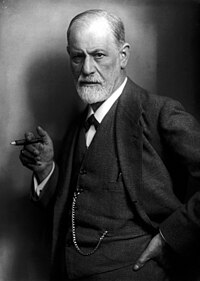
Sigmund Freud
(From Wikipedia)
Everyone loves a bit of juicy gossip. Let's be honest. And with the longstanding rumour that Sigmund Freud had a mistress, then this part-fact part-fictional tale is bound to appeal to people's natural curiosity. 
I don't really know much about Freud except for what I suspect is common knowledge (like his being the father of psychoanalysis and the concepts of the id, ego and superego and how all things can be explained by something sexual). I know all this superficially and I don't really have any preconceived notions about him. 
 
His rumoured mistress is his sister-in-law, Minna Bernays. Apparently not much is known about her and if we're to believe the turn of events, she ended up living under the same roof as with him and her sister for most of her life. Hmm. Doesn't this sound pretty sordid?

***
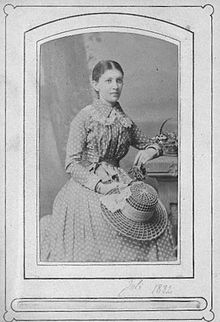
Martha Bernays
(From Wikipedia)
The beginning is ominous: "The season for suicides had begun," setting the tone for Minna's intellectual and societal limbo. She is let go in her employment as a lady's companion, daring to help a sick co-worker. With no real prospects, and still single at an age where women are expected to be married and with children, she finds herself as a reluctant helper in the household of her sister, Martha.

Married to the then-struggling to be recognized intellectual Sigmund, Martha meanwhile is obsessed with keeping house and taking care of the children, egged on by her habitual opiate taking. Young Minna has a natural intellectual affinity with Sigmund; she finds herself drawn to him but while fighting the urge to give in, obviously they both follow up on their feelings for each other and the whole sordid affair commences.

What stood out in my mind is how longsuffering Minna was as a lover, what a self-absorbed cad Sigmund was, and just how totally oblivious Martha was.

Ridden with guilt, Minna tries to break away. But to no avail. The affair rides itself out over the course of their lifetimes. The ending provides us the tragic picture of two women who vied for the affections of the same lover.

***

What I liked: 
I think that this novel accomplishes what it set out to do: meld fact and fiction to flesh out this rumoured affair. If you're interested in the fine detail, check out the back of the book for all the juicy sources of the evidence, particularly the discovery of Minna's long-lost letters to Freud.

Even more compelling is how readers are provided insight into the Vienna of the time, the pursuit of intellectual research and discussion, and the place of women in a stringent society of class and expectation. And my goodness, the drug use that is described in this book is fascinating, as so-called "medicinal use" was the norm at the time.

I personally thought this was quite the sordid affair. It's a tragedy of how an extremely self-absorbed man comes between two sisters. While it is first and foremost a love story of sorts, it is also a story of the testing of filial love.

If you're interested in Freud as a person, this gives you a peek into his character. Depicted as brilliant, focused and passionate about his work yet totally self-absorbed and selfish that he was oblivious to his wife, and later on, to his lover. Genius always comes with a price.

While it was natural that I initially sided with Minna, I didn't like Martha's character from the onset but my view of her changed towards the end. If there's anyone longsuffering, it's Martha.

***
Uh-oh: This is a story about an affair. The title says it all. Hence the predictability; you'll get your courtship, your sexual encounter, and lots of emotional drama. But you knew that already.

Verdict: A melding of fact and fiction of the affair between Sigmund Freud and Minna Bernays, this is the tragedy of a rather twisted love story, and an even greater tragedy of filial love. Those fascinated by Freud will enjoy a peek into his lesser-known side. Those who enjoy historical fiction will enjoy the depiction of Vienna at the turn of the century. Those who dislike sordid affairs in all its sordid glory may not find this very appealing.

Some interesting articles I came across:
About Karen Mack & Jennifer Kaufman
Karen Mack and Jennifer Kaufman c. Firooz ZahediFreud’s Mistress is the third novel by Karen Mack and Jennifer Kaufman. Their first novel, Literacy and Longing in L.A., reached #1 on the Los Angeles Times Bestseller List and won the Best Fiction Award from the Southern California Independent Booksellers Association. Their second novel, A Version of the Truth, was also a Los Angeles Times bestseller. Freud’s Mistress is their first historical novel. Karen Mack, a former attorney, is a Golden Globe Award-winning film and television producer. Jennifer Kaufman is a former staff writer for the Los Angeles Times and a two-time winner of the national Penney-Missouri Journalism Award. Both authors live in Los Angeles with their families.

Find out more about Karen and Jennifer at their website, and connect with them on Facebook.

GIVEAWAY!
Thanks to the publishers, I have one copy to giveaway to one of you lovely folks!
(US/Can only)


Check out the rest of the tour!
I received a copy of this book from the publisher via TLC Book Tours in exchange for an honest review.



Buy This Book from Book Depository, Free Delivery World Wide
Hardcover: 368 pages 
Publisher: Amy Einhorn Books/Putnam (July 9, 2013)

The Book of Madness and Cures by Regina O'Melveny


When madness has no cure but a loving daughter. 

Serious synopsis of The Book of Madness and Cures by Regina O'Melveny: Dr. Gabriella Mondini, a strong-willed, young Venetian woman, has followed her father in the path of medicine. She possesses a singleminded passion for the art of physick, even though, in 1590, the male-dominated establishment is reluctant to accept a woman doctor. So when her father disappears on a mysterious journey, Gabriella's own status in the Venetian medical society is threatened. Her father has left clues--beautiful, thoughtful, sometimes torrid, and often enigmatic letters from his travels as he researches his vast encyclopedia, "The Book of Diseases."

After ten years of missing his kindness, insight, and guidance, Gabriella decides to set off on a quest to find him--a daunting journey that will take her through great university cities, centers of medicine, and remote villages across Europe. Despite setbacks, wary strangers, and the menaces of the road, the young doctor bravely follows the clues to her lost father, all while taking notes on maladies and treating the ill to supplement her own work.

My two cents

The book in one sentence: A young Venetian woman and doctor seeks out her missing father and unwittingly discovers her father's secret and tragic past.

I won this book in giveaway over at I'd Rather Be Reading at the Beach (yeah, I really would! Thanks Vicki!). I have to admit, it's that gorgeous cover that got me. And when I read the synopsis, I felt it had shades of Tracy Chevalier and Prodigal Summer by Barbara Kingsolver.

This is a gorgeous book all around:
  • It's crammed with a rich historical story about a young Venetian woman who want practiced medicine -- then a rarity in a profession dominated and run by men. I have come away with a wonderful insight into the medical world of the 1600s (and a greater appreciation for female doctors being around now!)
  • Interspersed in the storyline are snippets of Gabriella's father's notes, and later her own, for "The Book of Diseases." These in itself are fascinating insights on how illness was perceived in the 1600s -- where what manifests itself as an ailment of the physical body or the mind and what physicians then attributed it to, often bordering on the obvious (according to today's science) an even to the mystical and magical. It reminds me how many things can remain unexplained even today despite technology. 
  • The language is languid and poetic. Sometimes I loved it, other times it honestly tired me out. 
  • The character of the father I felt was this book's saving grace -- this tortured soul stole Gabriella's thunder. The conclusion came to a satisfyingly tragic end. 

Uh-oh: While I wanted to like this book more, I couldn't for the life of me pinpoint why I didn't love it. I honestly did not feel for Gabriella. I don't understand why I couldn't empathize with her character more. While meant to exemplify strength of character and a strong woman of the time, my heart did not go out to her.

Verdict: A beautifully poetic historical fiction piece of healing and illness, of passion and madness, of how relationships can be tragedies in of themselves. Recommended for historical fiction buffs. 

Random quotes:
"I don't know where my own body begins or ends," said the young girl of Imizmiza. - p. 3

The hours of candlelight, encircled by a studious darkness, drew me closer to my intent. - p. 56

The Book of Madness and Cures by Regina O'Melveny
Book Depository


The 39 Clues (Books 1, 2, 3)

Amazing race meets addictive Facebook game.

I was on my weekly hunt at the thrift store and found a brand new copy of The 39 Clues Book 3: The Sword Thief, with all cards intact! (The sticker holding them in was unbroken!) And of course, how could I let that beautiful copy go to waste? I bought all $99 cents of it and took it home to my daughter.

Now, the daughter is pretty busy rereading her Harry Potter books, in time for the next HP movie installment. But she dove right into this one and it didn't take her long to finish. Before I knew it, she was online and asking us permission to get into the online game and she soon after used up her one-hour quota for computer use!

The books in one sentence each:


My thoughts

I heard about this series quite a while back, when Blooey blogged about it. Then I started noticing it on the bookshelves. But I never realized how complex this entire series is, with its card collecting, and the online game. Wow, what an incredible way to hook kids on a book series! While the online game can get any parent tsk-tsking with the amount of time it eats up, it does egg the kids to read the books.

Yes, the concept for the whole series is a little fantastic, but remember that this is a children's series after all! Fourteen-year-old Amy and eleven-year-old Dan, recently orphaned, discover that they belong to a family from which sprung some of the world’s most prominent personalities. The Cahill family has four branches:
  • Lucian - legendary leaders and spies, such as Benjamin Franklin, Theodore Roosevelt and Napoleon Bonaparte
  • Ekaterina - scientists and inventors like Galileo Galilei, Thomas Edison,  Marie Curie and Bill Gates
  • Janus - cultural icons like Mozart, Picasso, Van Gogh and Steven Spielberg
  • Tomas - daring explorers, discoverers, and athletes like Annie Oakley, Neil Armstrong and Babe Ruth
At their much beloved grandmother's funeral, Amy and Dan are faced with the tough decision: $1 million each or the first clue of 39 that will reveal the Cahill legacy. They choose the clue, and they start a journey of adventure and danger, pitted against their rich and often ruthless relatives.

The stories are fast-paced but highly readable. The "hook" for each book consists of a nice mix of things. One, of course, is the Clue - what is it? and will the siblings solve it? Two, is that each book focuses on a specific popular figures, allowing readers to learn more about them. Three, there are many dangerous run-ins with competing families, upping the suspense. It's the perfect mix that will get your child turning those pages.

Unlike many other popular series out there, each book of The 39 Clues is written by a different author, which I found very unusual. However, the dissimilarities in the writing aren't that apparent. I had first read Book 3 and was quite impressed by it. I followed it by Books 1 and 2 and realized that Book 3 was among the better ones, probably because the story and the characters had become better developed.   

Verdict: The series for youngsters to read, especially with the upcoming movie by Spielberg!

Night by Elie Wiesel


Back blurb of Night by Elie Wiesel: A terrifying account of the Nazi death camp horror that turns a young boy into an agonized witness to the death of his family … the death of his innocence … and the death of his God. Penetrating and powerful, as personal as The Diary of Anne Frank, Night awakens the shocking memory of evil at its absolute and carries with it the unforgettable message that this horror must never be allowed to happen again.

My reflections

First line: They called him Moshe the Beadle, as though he had never had a surname in his life.

Night by Elie Wiesel (Wiesel is 1986 Nobel Peace Prize Winner) is one of the most powerful pieces I have ever read. I finished with a heavy feeling in my chest, of tears unshed, of anger and hatred for what inhumanity man can stoop to.

"Never shall I forget that night, the first night in camp, which has turned my life into one long night, seven times cursed and seven times sealed. Never shall I forget that smoke. Never shall I forget the little faces of the children, whose bodies I saw turned into wreaths of smoke beneath a silent blue sky. Never shall I forget those flames which consumed my faith forever. Never shall I forget the nocturnal silence which deprived me, for all eternity, of the desire to live. Never shall I forget those moments which murdered my God and my soul and turned my dreams to dust. Never shall I forget these things, even if I am condemned to live as long as God himself. Never."

This is a surprisingly thin volume but you will feel drawn into the story. You can’t stop. Beautifully unverbose, it is an unromanticized historical account. It is exhausting to read as you feel the utter exhaustion that Elie went through – horror after horror, pushing one’s body and spirit to the limit. You need to find out what happens to Elie, his family, his father, to the other Jews. I couldn’t put it down. I finished this in a day.

While I cannot begin to imagine what horrors they faced. There is so much to be learned that you can only look at yourself and wonder what you would do in their shoes … and know in your heart of hearts that you too would question yourself, fellow human beings, and your God.

What is terrifying is that this is not merely a novel. Everything in it happened. Elie Wiesel held his silence for 10 years before he decided to to tell the world his story and that of many other Holocaust survivors.

The opposite of love is not hate, but indifference.

That is Wiesel’s message, and it is my sincere hope that I never become indifferent. Please read this book. It has moved me and my husband to tears.

Read more on about this amazing man at:

{Originally here.}

Strange Pilgrims by Gabriel Garcia Marquez


Back blurb of Strange Pilgrims by Gabriel Garcia Marquez: In Barcelona, an aging Brazilian prostitute trains her dog to weep at the grave she has chosen for herself. In Vienna, a woman parlays her gift for seeing the future into a fortune-telling position with a wealthy family. In Geneva, an ambulance driver and his wife take in the lonely, apparently dying ex-president of a Caribbean country, only to discover that his political ambition is very much intact.

In these twelve masterful stories about the lives of Latin Americans in Europe, Garcia Marquez conveys the particular amalgam of melancholy, tenacity, sorrow and aspiration that is the emigre experience.

My two cents

This is a fantastic book! If you aren't quite ready to plunge into Garcia Marquez's full length books, this one will give you a feel for how he writes. Despite some of these stories being only a few pages long, the stories will stay with you. They are beautifully un-verbose and showcase his gift for storytelling in magical, mystical prose. That is Garcia Marquez's magic.

If you've ever been in a foreign land, you can easily empathize with these characters' feelings of alienation and dislocation; of existing yet being unrooted from your realities and somehow making ones' self fit. The fit may not be quite right, but one manages.

Being of some Spanish influence, I believe that Filipinos (especially immigrants, overseas workers, and simply those visiting Europe and Americas) will see themselves in these characters and how they will tend to cling to familiar and often comforting traditions. You can change the exterior, but deep down you know who you are.

One of the most disturbing stories for me was the one where a woman simply wanted to use the phone ... but nonetheless ended up in an asylum. Over time she did become half insane. It is the tragedy of communicating, yet not being believed.

I have many favorite short stories here. Each story can be read leisurely in a few minutes. I suggest you not to rush through the entire thing in one sitting but savor each story, let it stay with you, and maybe even re-read it.

I've marked my favorite stories, through I loved each story in its own way.
  • Bon Voyage, Mr President
  • The Saint
  • * Sleeping Beauty and the Airplane
  • * I Sell My Dreams
  • "I Only Came to Use the Phone"
  • The Ghosts of August
  • María dos Prazeres
  • Seventeen Poisoned Englishmen
  • Tramontana
  • Miss Forbes's Summer of Happiness
  • *Light is Like Water
  • *The Trail of Your Blood in the Snow

The stories in this collection were originally written in a span of some 20 years, during the 70s and 80s. It wasn't published until 1992. Garcia Marquez draws from his own experiences as he spent some years as an exile from his native Colombia.

·
OLDER


© guiltless readingMaira Gall