


I decided to read this because: I've heard so much about this novel that I need to read it too. If I don't, I may miss out.
First line: It was 7 minutes after midnight.
Last line: And I know I can do this because I went to London on my own, and because I solved the mystery of Who Killed Wellington? and I found my mother and I was brave and I wrote a book and that means I can do anything.
The book in one sentence: A young autistic boy's world unravels as he tries to learn who killed his neighbour's dog.
I'd recommend it to: Anyone interested in autism. If you've watched Rainman, this is similar, and just as touching.
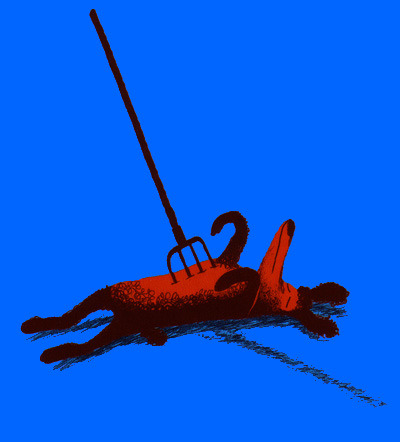
I liked: The story, which is bitter-sweet. And our hero, the 15-year-old boy Christopher is such a likable guy. It starts out innocently enough, with Christopher trying to figure out who killed Wellington, the neighbour's dog. He goes around investigating like his idol Sherlock Holmes and in the process, he discovers the disturbing truth behind his mother's "death." He deals with it somewhat detached and emotionless, compared to how a "normal" person would. Meanwhile, the people around him - his neighbours, his teacher, his father - deal with Christopher with empathy and understanding but doubtless having to deal with problems in their own "normal" way.
How Christopher deals with the harsh realities of life is an interesting insight in the thought processes of someone with autism. Christopher is a savant - brilliant and logical, and able to solve difficult math problems in his head. On the other hand, he has what we would consider as bizarre ways of making sense of the world - he categorizes the days by how many of a particular car color he is able to count (four red cars in a row mean a wonderful day, while four yellow cars mean a bad day, in which case he does not eat lunch and will not speak) - and his system fails when he is in a different routine. When he goes out of his comfortable little zone and into the "real" world to do some more sleuthing, Christopher somehow makes his coping mechanisms and discovers that he can do anything, empowering himself.
The storyline is interspersed with interesting trivia, diagrams and drawings galore, and lots of Mensa-like problems, all told from Christopher's viewpoint. This is a very interesting diversion from the main storyline. In fact I read the Monty Hall Problem three or four times because it was such a niggling problem that I had to make sense of. Click here for Mark Haddon's page on Monty Hall.
I didn’t like: Sometimes the smattering of trivia and mind problems interferes with the story and it can be distracting. How Christopher tells his story can sometimes seem so literal and straightforward, that it can feel numbing at times (fact after fact). The beginning seemed slow and it takes a little work to get into the story, as its not told in the typical way.
I didn’t like: Sometimes the smattering of trivia and mind problems interferes with the story and it can be distracting. How Christopher tells his story can sometimes seem so literal and straightforward, that it can feel numbing at times (fact after fact). The beginning seemed slow and it takes a little work to get into the story, as its not told in the typical way.
Author factoids: In an interview at Powells.com, Haddon said that this was the very first book he had written intentionally for adults. Imagine his surprise when his publisher suggested marketing it to both adult and child audiences!
Verdict: The whole book is like a distraction. But stick to it. Don't speed read. Don't pass judgement. And just go with it and you'll no doubt enjoy it.
"When I am in a new place, because I see everything, it is like when a computer is doing too many things at the same time and the central processor unit is blocked up and there isn't any space left to think about other things… And sometimes when I am in a new place and there are lots of people there it is like a computer crashing and I have to close my eyes and put my hands over my ears and groan, which is like pressing CTRL + ALT + DEL and shutting down programs and turning the computer off and rebooting so that I can remember what I am doing and where I am meant to be going."
Look these up:
- Mark Haddon's blog
- Interview with Mark Haddon
