classics
Showing posts with label classics. Show all posts

Lie in it! {Where Angels Fear to Tread by E.M. Forster}


You made your bed, now lie in it.

Synopsis of Where Angels Fear to Tread by E.M. Forster:
When attractive, impulsive English widow Lilia takes a holiday in Italy, she causes a scandal by marrying Gino, a dashing and highly unsuitable Italian twelve years her junior. Her prim, snobbish in-laws make no attempts to hide their disapproval, and when Lilia's decision eventually brings disaster, her English relatives embark on an expedition to face the uncouth foreigner. But when they are confronted by the beauty of Italy and the charm and vitality of the disreputable Gino, they are forced to examine their own narrow lives, and their reactions are emotional, violent and unexpected.

My two cents

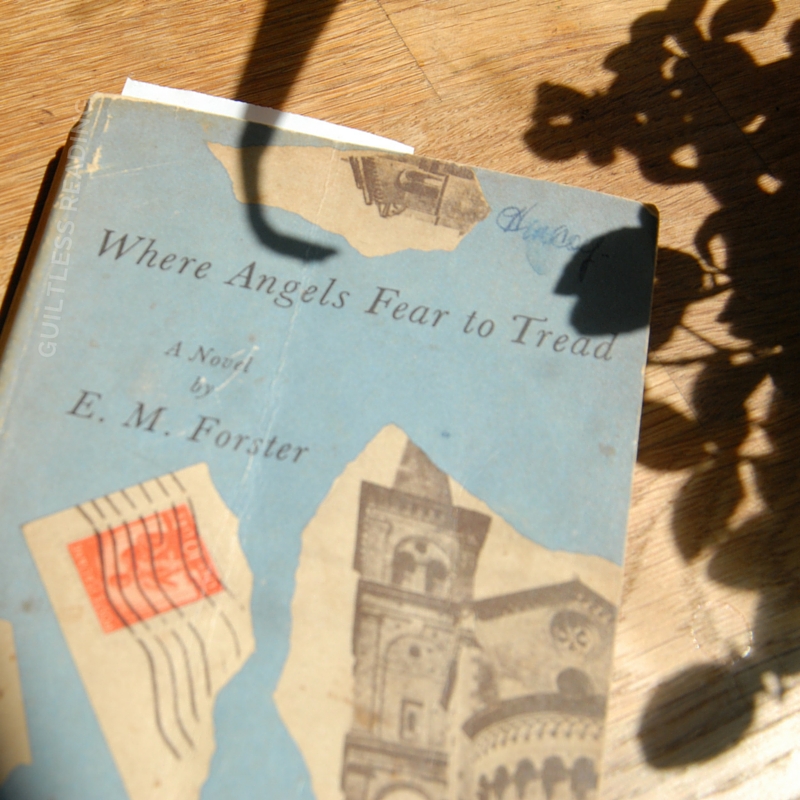
Well, this one languished. I was uber-excited to read it but never got around to actually putting pen to paper. Now, let's take a moment to admire the cover: I admit I bought it partly because the cover (fabulous, fabulous!) is designed by Leo Lionni, one of my all-time favourite children's books illustrators!

Honestly, this book was quite the surprise. I thought with my track record for being frustrated with classics in general this may be a miss. Yet I slowly warmed up and once mired, this one didn't disappoint.

What I liked

The psychology. The psychology behind classics can't be beat. I find that there are few bells and whistles and simply a presentation of who the characters are, their motivations, and their thought processes. It's material that always seems to stand the test of time.

I keep coming back to the title: where angels fear to tread. This one is about bucking tradition, following one's true desires, and dammit ... living with the consequences because you made your bed, lie in it. Sure, "fools rush in" but sometimes just going for it is the only way to go forward.

While for the most part, the characters are frigid, self-righteous, melodramatic and generally unlikeable, I found that their unlike-ability is what makes them human and accessible. I really need to laugh: these frigid English women (Lilia! Ms. Abbott!) make for great writing! Philip was among my favourite males, an annoying "messiah" who finally came to the realization of love. Gino, make no mistake about it, is what he is, and that's what makes him stand out - there is no shyness about him.

The plot. I thought I could predict what was going to happen, but I was stunned at the final turn of events. There is a tragicomedy to the whole storyline -- plus melodramatics that somehow works -- that make this so appealing to me.

Clashes here, there and everywhere. A large part of this book relies on cultural clashes, and naturally, character clashes. The cultural differences between the repressed and highly structure English versus the emotional, free-spiritedness of the Italians bring forth the best of ...

... subtle wicked humour. Forster's humour grew on me. He has a slyness about him in expressing the horrors of his characters being at cultural loggerheads. The absurdity of some of the pressures and expectations really make me thankful that I'm not of this era.

Verdict

Call me a fool. I may just have the heart of a classics reader after all! I'm rereading this -- I feel like it'll be better the second time around.

BabyLit's The Secret Garden: A Flowers Primer & Don Quixote: A Spanish Language Primer


Two more classics clothed in cuteness! 


About Little Miss Burnett: The Secret Garden: A Flowers Primer by Jennifer Adamas, illustrated by Alison Oliver
Introducing Little Miss Burnett’s The Secret Garden: A BabyLit Flowers Primer. From crocus to snowdrop, daffodil, snapdragon, and more, your child can be one of the few that is allowed in the secret garden all summer long!


About Little Master Cervantes: Don Quixote: A Spanish Language Primer by Jennifer Adams, illustrated by Alison OliverGet to know the “Hombre de la Mancha” in Little Master Cervantes’ Don Quixote: A BabyLit Spanish Language Primer. Learn everything a daring knight needs to know, in two languages! Man, armor, horse, lady, castle, and more! And of course, it wouldn’t be Don Quixote without a windmill! Each spread features English and Spanish translation side by side. ¡Que bueno!

My two cents

I've been a huge fan of the BabyLit series ever since I laid my eyes on them way back in 2012. Cuteness collides with the classics! And with these two new editions The Secret Garden: A Flowers Primer  and Don Quixote: A Spanish Language Primer, the adorable-ness continues.

The appeal of these books is compelling.

The fact that they are based on classics makes them especially appealing to literary fiends that are parents; it introduces elements of the classics to young 'uns in such a fun way. It's a sneaky way to get classics titles in a toddler's subconscious - literary brainwashing in the best way, anyone?

Of course, there is also the learning side to this series. The Secret Garden edition is all about different types of flowers - perfect for the wannabe gardener. Don Quixote is an English-Spanish primer, perfect for bilingual families.

The illustrations by Alison Oliver are the clincher: they are simple, graphic, adorable. Oliver's artwork would look wonderful in a nursery, don't you think? I've pulled out some illustrations in my previous posts, so I hope you check them out! (Here's Don Quixote and here's The Secret Garden).

I can't wait to see what other classics are transformed for toddlers in this series!

***

I reviewed two other books in this series - Jane Eyre and Alice in Wonderland. Check out the review and a video HERE.


I received copies of these books from the publisher for honest review consideration.

It's #AusteninAugustRBR!

Austen in August is an annual reading event celebrating one of literature’s greatest writers! This event was inspired by a Twitter conversation that took place four years ago between three founders of The Classics Club. Want to join in? Check out Roof Beam Reader's post!

I've decided to take a challenge that I've been avoiding for the longest time now. If you noticed I do not read or review a lot of classics. The classics intimidate me period.

But I'm taking the bull by the horns and simply just going to read some Austen this August. You'll have to bear with me though, as I'm taking this slowly.

Here's what I plan to read and review. It seems like a good way to dip my feet into some Austen, don't you think.

I am also planning to read either:

I've read one retelling of Sense and Sensibility and that didn't go over very well; it actually annoyed the heck out of me. Methinks the original needs to be read. (I have a niggling feeling that I read this - required? - but unfortunately forgettable.

I've definitely read this and quite enjoyed it. I was still in high school and I haven't picked it up since. 

Which of the two books do you think I should read? Is anyone else intimidated by classics like me?

Sidenote: Can you believe it's almost August? I can't. No really, where did the year go?

Depressing yet surprisingly tender {The Bell Jar by Sylvia Plath}


Depressing yet surprisingly tender. 

About The Bell Jar by Sylvia Plath: Plath was an excellent poet but is known to many for this largely autobiographical novel. The Bell Jar tells the story of a gifted young woman's mental breakdown beginning during a summer internship as a junior editor at a magazine in New York City in the early 1950s. The real Plath committed suicide in 1963 and left behind this scathingly sad, honest and perfectly-written book, which remains one of the best-told tales of a woman's descent into insanity.  

My two cents

Who hasn't heard of Sylvia Plath, the brilliant poet who committed suicide at a young age? That's as much as I know about her, unfortunately. This is one of those books that has remained on my TBR but never gets read; a classic that begs for attention but gets cast aside for the newer things that come my way.

I have to be honest with you. The reason I finally picked this up is because I'll be reviewing an autobiography Pain, Parties, Work: Sylvia Plath in New York, Summer 1953 by Elizabeth Winder and I didn't want to sound totally clueless. Thank goodness for these opportune kick-in-the-pants moments.

***

This is the journey of smart, young, ambitious promising Esther Greenwood in the 1950s from naive to jaded, from success to depression.

I could feel Esther's excitement at the opportunity and honour of being a guest editor in a prestigious magazine: oh the glamorous clothes, the photo shoots, the hobnobbing, free lunches, caviar. It's all enough to turn a young girl's head.

But things soured very quickly and the glitter and glamour only gave way to work, pressure, conformity, depression. This is the bell jar: Esther the specimen under scrutiny, the jar the suffocating reality in which she had to exist.

***

I found that reading this book was a rollercoaster ride. It's emotionally exhausting and heavily depressing, but at the same I felt oddly tender towards Esther. At times I found some scenes strangely hilarious in a shocking sort of way. There are those times when I felt I really couldn't breathe with the horrific descriptions of shock therapy, self-inflicted pain, and just the sheer mental anguish -- then juxtapose this with mundane descriptions about eating caviar (and lots of it), or a rather embarrassing sexual exploit, or of witnessing a live birth (that'll put anyone off from having kids).

I was quite affected by this book as this is told in first person. It's like getting into Esther's head which isn't a very pretty place to be (Thank goodness I'm not depressed or I may have been more affected by this novel than I would have cared to be). Esther is an astute observer and her descriptions of people, her love interests, situations and emotions are spot on, have an uncanny brevity, and interesting word choices and metaphors.

Plath also has quite the commentary about women during the 1950s, and Esther wasn't going to be one of them, she was among those breaking out of the mold. 
Once when I visited Buddy I found Mrs. Willard braiding a rug out of strips of wool from Mr. Willard's old suits. She'd spent weeks on that rug, and I had admired the tweedy browns and greens patterning the braid, but after Mrs. Willard was through, instead of hanging the rug on the wall the way I would have done, she put it down instead of a kitchen mat, and in a few days it was soiled and dull and indistinguishable from any mat you could buy for under a dollar in the five and ten. 
And I knew in spite of all the roses and kisses and restaurant dinners a man showered on a woman before he married her, what he secretly wanted  was her to flatten out under his feet like Mrs. Willard's kitchen mat.  - p. 82 
I'm a little smitten with Plath's writing and will now be checking out her poetry. And it looks like I'll be rereading this one too -- it's worth a closer look. Just let me recover.


Verdict

Dark, broody, depressing. Poor dear Esther. Don't read this if you're depressed. Just don't. I can't say I'm head over heels in love with this book but it's an impressively moving novel in its simplicity and the honest brutality of its telling. Definitely worthy of being a modern classic.


Friday 56 and Jane Eyre's Spring


There is no page 56 in this baby board book called Little Miss Bronte: Jane Eyre, so here is the number 5 ... brought to you by spring!

What better way than to start them early with the classics?

Join in the Friday 56 fun over at Freda's Voice!

Hope you all have a wonderful weekend!

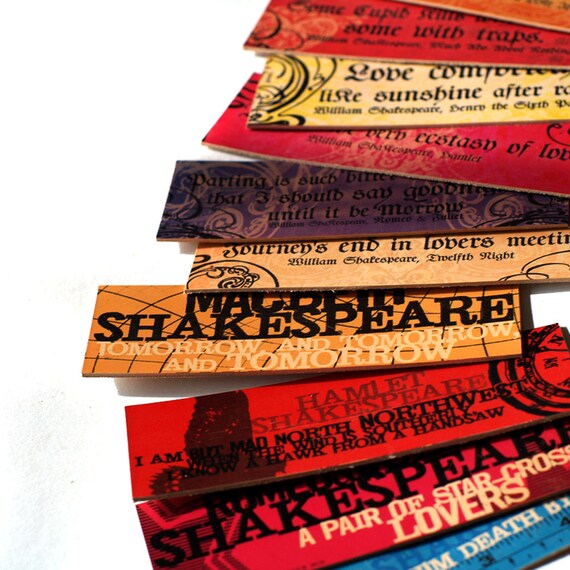
#BookmarkMonday 41: Get some Shakespeare!

Which Charles Dickens novel should I read this 2012?


I admit I have been remiss in reading Charles Dickens this month (I'm sorry Fig and Thistle). But I figure that since 2012 is the year of his 200th birthday (on February 7, to be exact), then I can very well keep him in TBR this year.!

Check out the short video by BBC and get the quick facts about Dickens. I also haven't yet figured out what Dickens book to read. Any suggestions which to read first?


Happy Charles Dickens Month!

I stumbled across this fun challenge at Fig and Thistle that would, at the least, get me thinking about Charles Dickens. I have a severe lack of classics in my reading list, and among my resolutions for 2012 is to get at least one classic read (and re-reads do not count!). So why not something by Charles Dickens? Some titles that immediately come to mind are:
  • Great Expectations
  • A Tale of Two Cities
  • A Christmas Carol (which I read absolutely ages ago)
  • David Copperfield
  • now I'm stuck ... I admit. :)
Charles Dickens is celebrating is 200th birthday on February 7. There is Dickens 2012, a whole website dedicated to celebrating all things Dickens! I am joining in Fig and Thistle's little challenge to move me on to reading Dickens. How does it work?
The premise is basic: every Tuesday in January (there are 5 Tuesdays) post something about Charles Dickens. It can be a book, short story, or film review. It could be about his life. It could even merely relate to his time period. Basically just have something relevant about Charles Dickens in your blog post (heck, it could even be a rant about how much you hate Charles Dickens). On his birthday, Tuesday 02/07 there will be a big wrap-up!
Well, on to the fun! Care to join in?

Pride and Prejudice-inspired bookends from two stray cats


Two Stray Cats is a store over at Etsy. They've come up with these beautiful bookends or what they call "shelf pillows" inspired by Jane Austen's Pride and Prejudice.
Hello, can anyone guess who said the above? Hint: It's a marriage proposal!
And there are more cool Pride and Prejudice-inspired bookends after the jump!

"Penguin-centric" Penguin covers


Genius! For Penguin's 75th anniversary, here's are some penguin-ified classics by Amy Fleisher.

My absolute favourite is after the jump!

Nothing to read while on the john? Grab your air freshener!


Disclaimer: This is nothing like my past posts of that perfume that smells of musty books. Or just plain wanting to get the "classic musty smell" so that "Your e-book reader may be new and made of plastic, but now your e-books can smell like vintage classics!"

I've seen strange things, but this takes the cake. It is totally brilliant! Watch this video to find out.

The full-sized image of the ad (that you can read) right after the jump!

The Sword in the Stone by T.H. White

How an awkward young orphan becomes King Arthur!

The book in one sentence: The orphan boy Wart, taught six years by the wizard Merlyn, is destined to be King!

My take: Can you believe I have never read The Sword in the Stone until now? I remember watching the animated 1963 version of it as a child and finding it deathly boring). But for some weird reason I know the story, well the gist of it, as I'm sure most of you have too. How Arthur became king. About the Knights of the Round Table. And Arthur's queen Guinevere. And you kid me if you have never heard of Merlyn the magician ...

I can't believe I waited this long! I have fallen in love with this book, and it is among The Lord of The Rings and The Chronicles of Narnia - classics which need to be re-read! It came out in 1938 and is part of a tetralogy (yes, 5 books) called The Once and Future King. Now I am on the look-out for the other books!

The story is an amazing combination of legend, history, and fantasy. It is philosophical in places. It is witty. It is beautifully written. And oh, and it is extremely funny too!

The Curious Case of Benjamin Button by F. Scott Fitzgerald

The Curious Case of Benjamin Button (Collins Design Wisps)If you've watched The Curious Case of Benjamin Button but haven't read the book, well, you're in for a surprise. Because the book upon which it is based is a totally different story. There is no romantic Somewhere in Time-like saga love story and I seriously doubt that Benjamin Button looked as strapping Brad Pitt did in the prime of his life. Oh, and Daisy isn't anywhere near as hyped nor as engaging as in the movie.

I decided to read this because: Once again, I found out that the movie was based (ok, very loosely) on a book. And it's a classic. So I decided to find out if the movie did the book justice.

First line: As long ago as 1860 it was the proper thing to be born at home.

The book in one sentence: This is about the curious case of Benjamin Button who is born an old man and lives his life in reverse.

I'd recommend it to: Anyone who likes really good short stories. Or anyone who found the movie to be a lot of Hollywood fluff :)

I liked: This is a short story, told succinctly (60 pages, with illustrations) and poses a very simple dilemma ... examining a life lived in reverse! Benjamin is born an old man, then, defying all natural laws, grows younger instead of older, until that point where he disappears into nothingness. By suggesting this impossibility, it can make one re-examine the whole question of living life and mortality in general. I enjoyed the story line and given that this was written in 1921, it probably was a novel and original idea at the time. 


It looks at how a reversed life is both a blessing and curse. For example, Benjamin falls in love with his young beautiful wife at an age where both are more or less the same age; their relationship suffers as he continues to grow younger and she older, both losing physical interest in each other. At another point, Benjamin serves in the war. A decade later he is called back to serve again but he has grown younger and is not taken seriously. And how about being patted on the head by your own son because you physically look like his son? Sounds pretty comic but can be quite a tragedy.

I've never read anything by F. Scott Fitzgerald, but having dipped my toe into his work now gives me some idea that his work is not necessarily daunting.


Worth mentioning is that this edition of the book has lovely color illustrations by Calef Brown (see insets). They look like the belong in an art gallery!

I didn't like: Story-wise, I love this book. But my gripe is good thing I borrowed this copy ... it really isn't worth $10 for such a short short story. You'd be better off reading this online or maybe buying a collection of short stories. 

Verdict: An interesting and novel question posed in this simple and quick read. Read it when you get the chance! And I'll be looking up more of F. Scott Fitzgerald's books!


The Pearl by John Steinbeck

The Pearl by John Steinbeck

First line: Kino awakened in the near dark.

My thoughts: I’ve been meaning to say a few things about this slim but packed book. This may be required reading in US schools, but here in the Philippines, I’ve seen more than a few of old browning copies languishing in school libraries.

Which is a pity. Steinbeck has written a beautiful parable of what greed can do to even the kindest, most upright man. It traces how in your quest to find the “solution” and eventually have the “solution” in your grasp, that you slowly realize that you have subconsciously turned into the very type of person you despise.

More importantly, I feel that it brings us back to basics, in a rather dramatic fashion – pointing out the obvious: that money can never take the place of a happy family and a sense of community.

Two paragraphs sum up the transformation of the pearl and Kino:
” … there it lay, the great pearl, perfect as the moon. It captured the light and refined it, and gave it back in silver incandescence. In the surface of the great pearl he could see dream forms.” (p. 25)

“And the pearl was ugly; it was gray, like a malignant growth” (p. 117)

I read this in a day, but what I got from it is invaluable. Good and evil both reside in men, cliche as it may sound, and what one must do to fight the evil often means learning just how ugly one’s soul can be.

It does also raise more questions: Are things sometimes better left alone? Does this mean we shouldn’t strive for a better life, and become complacent? How does one deal with temptation, when one is so ill equipped to do so?

Last line: And the music of the pearl drifted to a whisper and disappeared.

{Originally here.}
·
OLDER


© guiltless readingMaira Gall